Buying Horse Property in Middleburg
How to compare horse property across Middleburg, Upperville, and The Plains, including working land, conservation restrictions, foxhunting access, and operational fit.
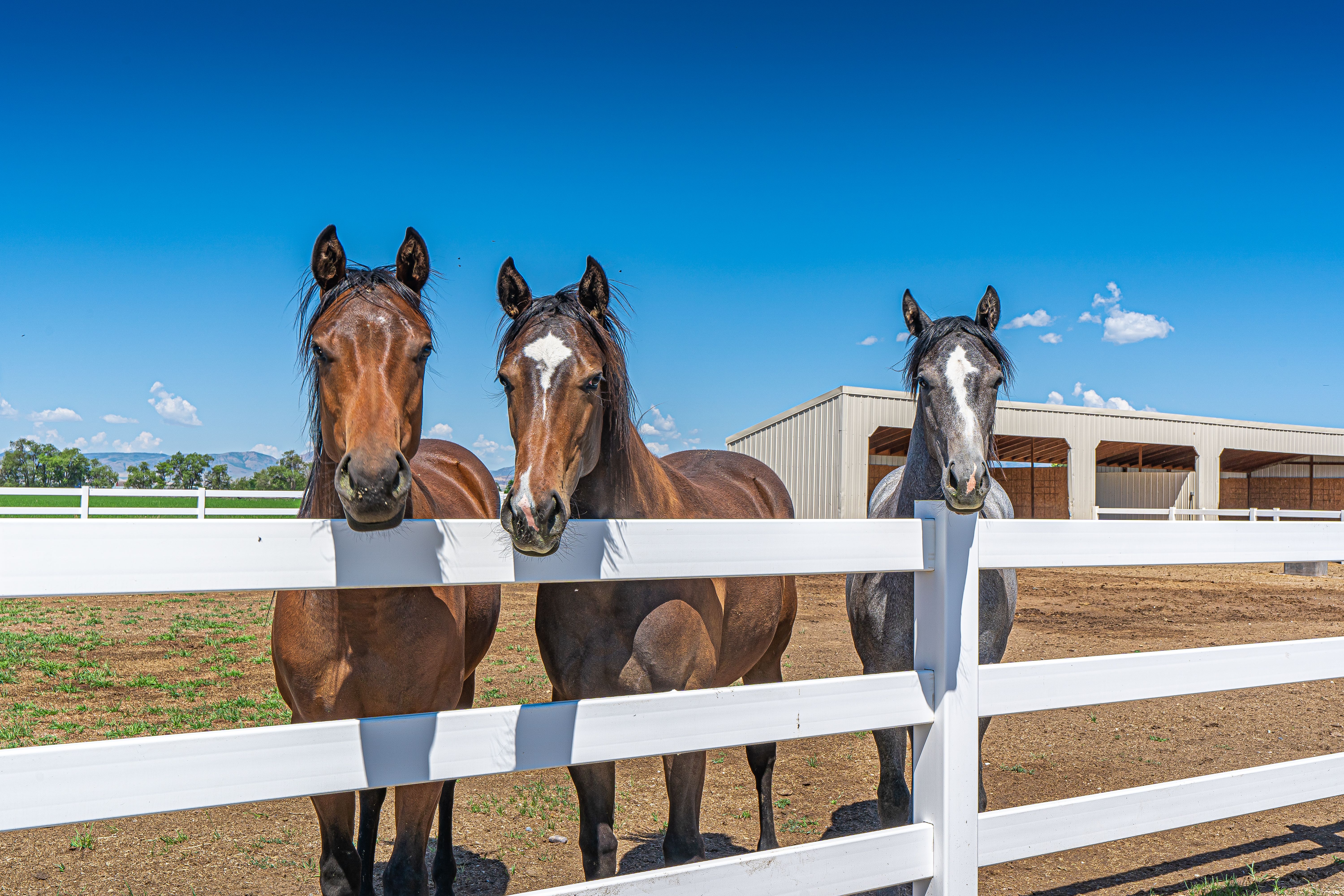
Middleburg, Virginia
TL;DR
Middleburg-area horse property should be compared across the wider corridor, not treated as one uniform market. The useful purchase is the one where working land, conservation restrictions, access, facilities, and location align with the buyer’s discipline, horse count, and long-term operating plan.
Search for “Middleburg equestrian real estate” and the town itself is rarely where the search ends. It moves outward, into Upperville, The Plains, western Loudoun County, and the Fauquier County countryside beyond it. That’s not a detour from the real search — it is the real search. Middleburg is the recognized name attached to a much larger stretch of Virginia Hunt Country, and the farms, estates, and acreage that matter to a serious buyer extend well past the town limits.
Loudoun County and Fauquier County both hold significant pieces of this market, and neither should be treated as a fallback for the other. Understanding how they differ — and how towns like Upperville, The Plains, Purcellville, Marshall, Delaplane, and Aldie fit into the picture — changes what a buyer should actually be looking for.
Middleburg Is the Center of a Region, Not a Single Market
Middleburg sits at the heart of Virginia Hunt Country, in the Piedmont region between the Blue Ridge foothills and the edge of Northern Virginia’s suburban growth. Its name carries the identity of the broader area, but the acreage, farms, and estates that define this market are spread across Loudoun and Fauquier counties, not confined to the town itself.
That distinction matters practically. A buyer searching only within Middleburg’s immediate surroundings may miss farms in Upperville or The Plains that better fit their acreage needs, price range, or intended use — while still remaining fully within the same hunt territory, the same trainers’ and veterinarians’ service areas, and the same cultural and equestrian community that gives the region its identity.
Middleburg, Upperville, The Plains, and the Wider Corridor
Upperville is as much a part of this hunt-country identity as Middleburg itself, with larger farms, historic estates, and acreage that reflects a long, continuous history of horse-country land use. Buyers looking for a serious working farm or an established equestrian estate frequently find themselves drawn here.
The Plains sits on the Fauquier County side of the corridor, with its own connection to hunt territory, larger acreage, and working farms. It’s a natural extension of the search for buyers who want the same character as Middleburg with different property types or price points available.
Purcellville and western Loudoun County offer a way to stay connected to Loudoun County’s broader amenities and Northern Virginia access while still buying genuine horse property — a middle ground between suburban Loudoun and the more remote reaches of hunt country further south and west.
Marshall and Delaplane, on the Fauquier side, extend the search into more rural settings, with acreage, farms, and equestrian facilities that suit buyers looking for more land and more separation from development pressure.
Aldie occupies the transitional ground between suburban eastern Loudoun and the traditional horse country that begins in earnest around Middleburg — relevant for buyers weighing how far out they actually need to go.
Treating these places as interchangeable misses what makes each one distinct. Treating them as a connected corridor, each with its own character and its own concentration of property types, is what actually narrows a search to the right farm.
Different Properties, Different Purposes
“Middleburg horse property” describes a wide range of assets, and conflating them is one of the more common mistakes buyers make in this market. Worth distinguishing from the outset:
- Small private horse properties — built around personal ownership, not a working operation
- Historic estates — older stone or frame homes with farm history attached, not always with modern equestrian infrastructure to match
- Hunt-country estates — larger properties built around riding, hunt territory access, and a traditional Virginia horse-country lifestyle
- Professional training farms — configured around a working training program and client horses
- Hunter/jumper facilities — built around arena footing, jump fields, and the specific needs of that discipline
- Eventing properties — with cross-country footing and terrain considerations distinct from a pure hunter/jumper facility
- Breeding farms — with foaling, turnout, and barn configurations built around that operation
- Polo-related properties — less common but present in the region, with their own facility requirements
- Large working farms — substantial acreage with a genuine agricultural or equestrian operation attached
- Conservation-oriented landholdings — acreage where land stewardship and easement protections are as central as the equestrian use itself
A historic stone house can be exceptional while the farm layout is completely wrong for the intended operation — which is exactly why the house is often the least reliable indicator of whether a property will actually work.
How Intended Use Changes the Search
What you plan to do with a horse property changes almost everything about what makes a property good or bad. A private owner keeping a few horses for personal riding has a different list of requirements than:
- a hunter/jumper or eventing rider who needs a properly built arena or jump field,
- a breeding operation, where barn configuration and turnout for broodmares and young stock take priority,
- a training business, with the working infrastructure and often the zoning considerations that come with client horses on the property,
- a buyer focused on riding directly into hunt territory or nearby trails, where field access and adjoining land matter as much as the property’s own acreage,
- or a conservation-minded buyer for whom protecting the land itself is as important as the equestrian facilities on it.
Two properties with similar acreage can serve entirely different buyers well. A farm with excellent hunt-field access and modest facilities might be exactly right for a foxhunting buyer and largely beside the point for a competitive hunter/jumper rider who needs serious arena footing instead. Being specific about your intended use before touring properties changes which farms are worth evaluating in the first place.
Evaluating the Working Land, Not Just the Estate Home
Buyers touring Middleburg-area properties often respond first to the house — stone construction, historic character, mature landscaping. None of that tells you whether the farm functions. Equestrian property should be evaluated as a working land system, not merely an estate home with a barn attached to it.
Worth assessing directly, on the ground:
- Usable acreage versus total acreage — rolling Piedmont terrain, woodland, and stream corridors can all reduce how much of the listed acreage actually supports pasture or turnout
- Pasture layout and field rotation — whether paddocks are arranged to support proper rotation or were laid out without a working plan
- Fencing condition — board fencing and stone walls both appear throughout the region, and their condition and placement matter more than their material
- Water availability — wells, ponds, streams, and stream crossings, and whether supply and access hold up through the season rather than just on a dry afternoon
- Drainage and slopes — Piedmont topography varies enough within a single property that drainage and slope should be walked, not assumed
- Barn placement and configuration — bank barns and center-aisle barns both appear here, and placement relative to paddocks and farm roads affects daily function
- Trailer circulation and farm-road condition — narrow entrances and older farm lanes, common on historic properties, can create real daily friction
- Arena placement and footing — for any buyer whose use depends on it, footing construction underneath matters more than surface appearance
- Manure management, hay storage, and equipment access — unglamorous but directly tied to how a farm actually operates day to day
- Caretaker housing and utility access — relevant for any operation beyond a strictly private one
Older and historic properties bring their own complications worth naming directly: outdated barns, narrow entrances built for another era of farm equipment, older electrical systems, agricultural buildings converted to other uses, drainage problems that predate current ownership, and fencing that looks appropriate but requires constant maintenance. A property can be visually attractive and operationally inefficient at the same time, and it’s worth evaluating for both.
Conservation Easements, Historic Land, and Development Restrictions
This is a defining feature of the Middleburg-area market and one that deserves direct attention rather than a passing mention. Conservation easements are common throughout Loudoun and Fauquier counties, and they protect exactly the kind of open, rolling farmland that draws buyers to this region in the first place — while also limiting what a future owner can do with it.
A conservation easement may protect what makes a property desirable while also limiting what a buyer can change. That can affect future barns, arena construction, additional residences, subdivision potential, commercial equestrian activity, land clearing, fencing, and even road improvements, depending on the specific terms attached to that parcel.
Beyond easements, buyers should be aware of historic preservation considerations, large-lot agricultural zoning, deed restrictions, protected open space, stream buffers, and scenic-road considerations that can apply to properties throughout the corridor. None of these are uniform across the region, and none should be assumed based on a neighboring property or general familiarity with the area. Acreage alone does not determine what a property can become — the restrictions attached to that specific parcel do, and they’re worth verifying directly before any purchase decision.
Foxhunting, Sport Horses, and the Broader Equestrian Ecosystem
Middleburg’s identity is tied closely to foxhunting and hunt culture, with recognized hunts, hunt fixtures, and hunt territory woven through the surrounding countryside. Organizations and venues associated with the region’s equestrian life — from established hunts to venues that host steeplechase racing and major horse shows — have shaped both the land-use patterns and the cultural identity of the area over a long period of time.
That said, not every property in this corridor is connected to foxhunting, and not every buyer here participates in hunt culture. The region supports hunter/jumper and eventing competition, dressage, trail riding, boarding and training operations, and private ownership entirely disconnected from hunt tradition. The presence of that broader ecosystem — trainers, farriers, veterinarians and equine hospitals, feed suppliers, tack shops, and transport services — benefits every kind of equestrian buyer in the area, regardless of discipline.
Northern Virginia’s Edge, Without the Commute-Guide Framing
Middleburg’s position within reach of the Washington, D.C. and Northern Virginia metropolitan economy shapes who ends up buying here. Some buyers are relocating from closer-in Northern Virginia and want acreage without fully disconnecting from regional business centers. Others are second-home or estate buyers, or professional equestrians drawn by the training and competition infrastructure. Development pressure from eastern Loudoun has also pushed some buyers further west and south, into the more established horse country around Middleburg, Upperville, and the Fauquier County side of the corridor.
None of this determines drive times or commute practicality for any specific property — that’s a question to answer for the actual parcel in question, not to assume from the region’s general reputation.
Why Historic or High-End Appearance Isn’t the Same as Operational Fit
The properties that draw the most attention in this market are often the ones with the strongest visual presence — stone houses, mature trees, long approach drives. None of that guarantees the farm works for its intended purpose. A historic property can carry real charm and real operational limitations at the same time, and the buyers who evaluate both, rather than being drawn in by the first, tend to end up with properties that actually function the way they need them to.
Finding the Right Property Specialist
This page exists to help serious buyers understand how the Middleburg-area equestrian market actually functions before evaluating individual farms — not to serve as the listing brokerage for any property in it. The right specialist for a buyer looking for a small private horse property is not the same as the right specialist for a hunt-country estate, a training operation, or a buyer focused specifically on conservation land and long-term stewardship.
If you’re evaluating equestrian property anywhere across Middleburg, Upperville, The Plains, Purcellville, western Loudoun County, Marshall, Delaplane, Aldie, or the broader Fauquier County countryside, we can help identify a real estate professional whose experience matches your intended use and the specific part of Hunt Country you’re searching in.
Talk through the assignment
Find an agent who understands this kind of property.
Tell Dalton the location, your intended use, and the details that cannot be compromised. He will help connect you with a knowledgeable equestrian real estate professional whose experience fits the property.
Describe what you need