Buying Horse Property in Tryon
How terrain, road access, usable acreage, zoning, and proximity to Tryon International shape a horse-property search across the Blue Ridge foothills.
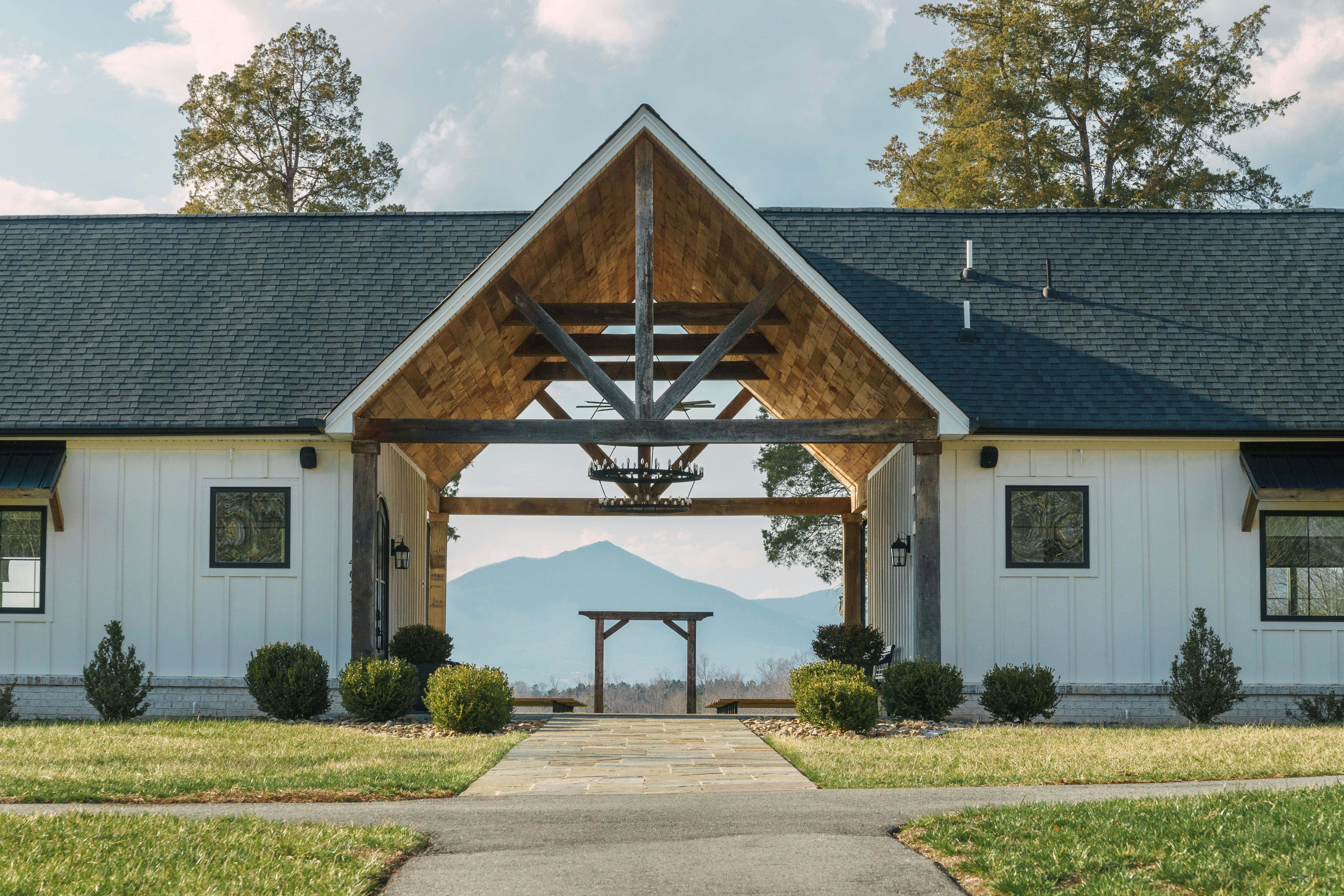
Tryon, North Carolina
TL;DR
Tryon horse property is a regional foothills search where terrain can make total acreage misleading. Buyers should focus on usable ground, trailer-safe access, drainage, facility layout, zoning, and practical proximity to the venues and services their horses actually require.
Most searches for Tryon equestrian real estate start with the town itself. Most of them end somewhere else—Mill Spring, Green Creek, Columbus, even across the state line in Landrum. That isn’t a failure of the search. It’s how this market actually works. Tryon functions less like a single-city real estate market and more like the recognized name for a horse-property region that spans two states and several counties.
If you’re looking for a horse farm, an equestrian estate, or acreage with enough usable ground for a private barn, understanding that regional structure matters more than any individual listing photo.
Tryon Is the Name of a Region, Not a Boundary
Tryon, North Carolina sits in Polk County, in the Blue Ridge foothills along the North Carolina–South Carolina line. The town itself is small. The equestrian identity attached to its name is not—it extends through Columbus, Mill Spring, and Green Creek to the north and west, and across the state line into Landrum and Campobello, South Carolina, to the south. Rutherford County and Henderson County border the area and hold additional acreage that shows up in the same practical search, even when a listing’s mailing address reads differently than a buyer expects.
Buyers who search only within Tryon’s town limits routinely miss the properties that would have suited them best. A ten-acre parcel in Mill Spring or a working farm outside Landrum can be a better fit than anything actually inside Tryon—closer to the acreage, terrain, or price point a buyer needs, while remaining fully inside the same horse community, the same trainers’ circuit, and the same drive time to the region’s competition venues.
This is the first thing to understand about the market: the geography is regional, the culture is shared, and the state line running through the middle of it is more of an administrative detail than a real divide in how people live, train, and compete here.
The Corridor: What Each Area Actually Offers
Tryon and Columbus carry the area’s established town identity—closer to downtown amenities, longstanding equestrian infrastructure, and the historic center of the local horse community. Properties here tend to be smaller and closer to established neighborhoods than what you’ll find further out.
Mill Spring and Green Creek sit at the center of the region’s newer equestrian expansion, in the orbit of Tryon International Equestrian Center. This is where larger acreage, working farms, and purpose-built equestrian estates are more commonly found—properties built or expanded specifically around competition, training, and boarding.
Landrum and Campobello, South Carolina are part of the same functional horse-country search for many buyers, despite the state line. Trainers, boarding barns, and riders move across that line constantly, and a buyer focused strictly on the North Carolina side may be passing over properties that function identically to ones ten minutes north.
Broader Polk County and the surrounding foothills—including edges of Rutherford and Henderson counties—hold a wider range of inventory, from smaller private horse properties to larger working farms and estates, with more variation in terrain and infrastructure than the core areas immediately around town.
None of these areas are interchangeable, and none of them should be treated as a fallback for whichever one the search started in. Each has a different practical relationship to acreage, terrain, and proximity—which is exactly why the right property for one buyer’s intended use is often the wrong one for another’s, even within the same few square miles.
Intended Use Changes What You’re Actually Shopping For
The most common mistake in this market is treating a horse property search like a house-and-acreage search with a barn attached. It isn’t. What you need from a property depends entirely on what you intend to do with it.
A private owner keeping two horses for personal riding has different requirements than:
- a professional trainer running a working program,
- a competitive rider who needs arena access and a serious training schedule,
- a breeding operation with different barn, turnout, and foaling needs,
- a boarding operation that has to satisfy zoning and commercial-use questions the private buyer never has to think about,
- a buyer who specifically wants an arena on the property rather than access to one nearby,
- someone who wants direct or nearby trail access rather than ring work,
- or a buyer relocating specifically because of proximity to Tryon International Equestrian Center and the training and competition access that comes with it.
Two properties with identical acreage numbers can serve completely different buyers. A four-stall barn with a small paddock and no arena might be exactly right for a private owner and completely wrong for a trainer building a client program. A property with excellent pasture but no covered arena might suit a trail-focused buyer and frustrate a dressage rider training through a Carolina winter. Before evaluating any specific property, it’s worth being honest about which of these categories you actually fall into—because it changes almost everything else on this list.
Reading the Land: Acreage Is Not the Whole Story
Listed acreage is the number that gets buyers in the door. It’s also the number that tells you the least about whether a property will actually work for horses.
Ten acres of gently rolling, well-drained pasture functions very differently than ten acres that includes steep slope, wooded terrain, standing water, or limited building sites. In foothill country, that gap between advertised acreage and usable acreage is common enough that it should be a standing question on every property, not an afterthought. Advertised acreage matters less than the portion a horse operation can actually use.
Worth evaluating directly, ideally in person and not from a listing description:
- Topography and slope—how much of the land is actually rideable and buildable versus steep or unusable
- Pasture condition and soil—whether the ground currently supports turnout or would need significant renovation
- Drainage—foothill terrain sheds water differently than flat land, and poor drainage shows up fast in paddocks and run-in areas
- Water access—wells, creeks, and pond access, and whether they’re reliable rather than seasonal
- Fencing condition—not just whether fencing exists, but whether it’s horse-safe, maintained, and appropriately placed for the pasture layout
None of this is visible from a listing photo. It’s the difference between a property that reads well on paper and one that actually functions as a horse farm on day one.
Barns, Arenas, Fencing, and the Infrastructure That Actually Matters
Barn condition gets attention in listings; barn configuration is what actually matters to a buyer who knows what they’re looking at. Stall count is a starting point, not an answer. The real questions are about layout and function: tack room placement, wash rack access, feed and hay storage separate from stall areas, equipment storage, and whether the barn has any caretaker or barn apartment space if that matters to your operation.
Arenas are similarly easy to overstate and underbuild. An outdoor riding ring is not the same commitment as a properly constructed dressage or jumping arena with real footing and drainage underneath it—and the difference matters most in exactly the wet foothill winters this region gets. If arena access is central to why you’re buying, ask what’s actually underneath the footing, not just what the footing looks like on a dry day.
Run-in sheds, paddock layout, and turnout rotation matter as much as the barn itself for horses that live outside more than in. And fencing—line placement, material, and condition—is one of the most overlooked line items on a property that otherwise looks finished.
A beautiful barn does not fix poor trailer access. This is worth saying plainly, because it’s one of the most common mismatches between what draws a buyer to a property and what actually determines whether it works long-term. Farm road condition, turning radius, and trailer maneuverability around the barn and parking areas are unglamorous details that decide how much daily friction you’ll live with.
Access, Roads, and the Realities of Foothill Terrain
Road access in this region is not uniform. Some properties sit on well-maintained frontage roads with easy trailer access; others sit at the end of long gravel drives that become a different problem in wet weather. Trailer maneuverability—turning radius, parking, and the ability to load and unload without a three-point routine every time—is worth walking through in person, not assuming from a site plan.
Access easements are also worth confirming directly rather than assuming. Rural acreage in this region sometimes depends on shared or easement-based access, and that detail matters more for a working farm with regular trailer traffic than it does for a single private residence.
Zoning, Deed Restrictions, and Commercial Use
Whether a property allows horses at all, how many, and whether commercial activity—boarding, training clients, lesson programs—is permitted, depends on local zoning and any deed or conservation restrictions attached to the land. This is not uniform across the region, and it is not something to assume based on how a neighboring property is currently being used. A private buyer keeping horses for personal use typically has more latitude than someone planning a boarding or training operation, and that distinction is worth confirming before, not after, a purchase.
Agricultural-use designations, conservation easements, and any restrictions tied to prior land use can all affect what’s actually possible on a given parcel. These are legal and regulatory questions specific to each property and each county, and they should be verified directly rather than assumed from the listing or from general familiarity with the area.
The Relationship to Tryon International Equestrian Center
Tryon International Equestrian Center has shaped a meaningful share of the region’s real estate demand—for competitive riders and trainers who want proximity to a major hunter/jumper, dressage, eventing, and combined driving venue, and for buyers whose interest in the area exists specifically because of that access.
That doesn’t mean every buyer in this market is shopping with TIEC in mind, or that every property near it is priced or built around competition use. It does mean that proximity to the venue, and to the trainers, farriers, veterinary practices, and feed suppliers that cluster around that kind of infrastructure, is a real factor for a meaningful segment of buyers—and one worth being explicit about if it applies to you, since it changes which parts of the region are worth focusing the search on.
North Carolina Versus South Carolina: What to Actually Ask
Buyers searching this corridor eventually run into the state line, usually somewhere between Columbus and Landrum. The practical horse-country experience doesn’t change much crossing it—trainers, barns, and riders move across that line regularly, and it doesn’t divide the community in any way that matters day to day.
What can differ are the underlying legal and regulatory frameworks: zoning approaches, land-use classifications, and agricultural designations are set at the county and state level, and North Carolina and South Carolina don’t necessarily handle them identically. Rather than assume those differences favor one side or the other, treat it as a standing question for any property near the line—confirmed with the relevant county, not inferred from general reputation.
Why Equestrian Property Isn’t Conventional Acreage
A conventional residential acreage search asks whether a house works, whether the lot is buildable, and whether the location suits daily life. An equestrian property search asks all of that and then asks a longer list of questions on top of it—about pasture, drainage, barn function, arena construction, fencing, trailer access, and the regulatory reality of keeping and potentially training or boarding horses on that specific parcel.
That’s why a generic residential search, even a good one, tends to under-serve equestrian buyers. The property that looks right in photos is often the one that hasn’t been evaluated against the questions that actually determine whether it works for horses—and the property that gets passed over because it photographs less well is sometimes the one that would have worked best.
Finding the Right Property Specialist
This page exists to help serious buyers understand the Tryon equestrian corridor before they start evaluating individual properties—not to serve as the listing brokerage for any property in it. The right agent for a private buyer looking for a small personal horse property is not necessarily the right agent for a trainer building a client program, a breeder, or a buyer focused specifically on proximity to TIEC.
If you’re evaluating equestrian property anywhere across Tryon, Mill Spring, Columbus, Green Creek, Landrum, Campobello, or the broader Polk County foothills, we can help identify a real estate professional whose experience matches your intended use and your specific area of the search—rather than pointing you toward whichever agent happens to have the closest listing.
Related regional specialty-property guides
- Heaven’s Landing aviation real estate
Talk through the assignment
Find an agent who understands this kind of property.
Tell Dalton the location, your intended use, and the details that cannot be compromised. He will help connect you with a knowledgeable equestrian real estate professional whose experience fits the property.
Describe what you need